
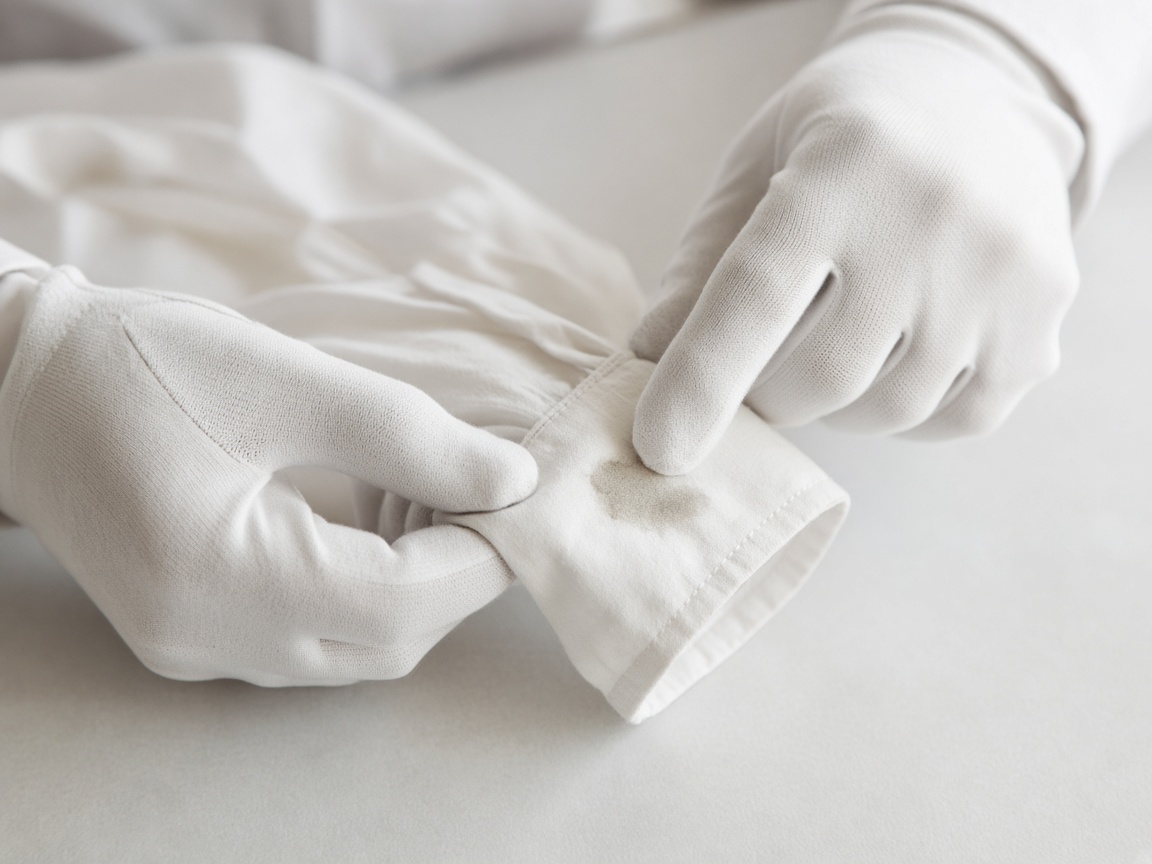
Most stains are easier to lift when they are fresh and when we know what caused them. Rubbing soap into a mark at the kitchen sink often does the opposite of help: it can drive oil deeper, spread turmeric, or set protein from milk and blood with heat and friction.
Leave the mark. Tell us the story.
Empty the pockets, keep the stained area facing out if you can, and write down the fibre and the cause — oil, ghee, turmeric, ink, grass, or a colour run from another garment. That note is not bureaucracy. Oil and turmeric need different pre-treatments. Ink on cotton is not the same job as ink on silk. Guessing wastes a first wash that we cannot always undo.
What we do at the plant
At the plant we pre-treat with a solvent or enzyme matched to that fibre, then wash. Fresh food and oil marks often come away cleanly. Old marks, marks that have been ironed, or marks that have already been scrubbed with household soap may lighten rather than vanish. If a process is aggressive enough to risk the cloth, we pause and contact you before we go further.
Colour runs and mixed loads
If a red kurta has bled onto a white salwar, say so. Colour-run is a different station from a food stain, and it is much harder after a hot wash at home. Keep the pieces together so we can see the donor dye and the damaged cloth in one ticket.
Heat-set and vintage stains
A stain that has gone through a dryer or a hot iron is heat-set. We will still treat it, and we will be honest about the likely result. Vintage or unknown marks get a conservative first pass. The aim is a wearable garment, not a chemical experiment on a piece you cannot replace.